Beach Designer Font Review
As a web designer, I’m always on the lookout for fonts that bring personality and visual interest to a site without sacrificing readability. Beach Designer is one of those rare finds—a display typeface that feels both playful and professional, perfect for adding a touch of charm to digital projects.
First Impressions on a Landing Page
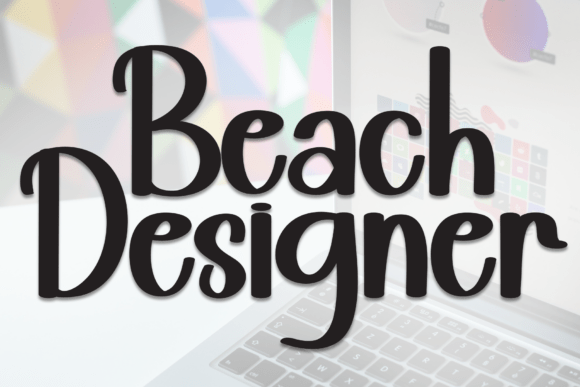
I first tested Beach Designer on a landing page for a boutique online store. The hero section needed a bold, eye-catching headline that would stand out against a soft background image. I used Beach Designer for the main title, and it immediately added a sense of warmth and approachability. The font’s subtle swashes and gentle curves gave it a handmade feel, which aligned perfectly with the brand’s aesthetic.
On mobile devices, the font remained legible even at smaller sizes. It didn’t get lost in the design, and the spacing between letters felt just right. This made it ideal for a call-to-action button or a heading that needed to command attention without overwhelming the viewer.
Using Beach Designer in Headers and CTAs
One of the most effective uses of Beach Designer is in headers and call-to-action buttons. Its unique character makes it perfect for section headings that need to draw the eye but still maintain a clean, modern look. I paired it with a simple sans serif font for the body text, and the contrast was striking—Beach Designer brought energy to the design while the other font provided clarity and structure.
For a course sales page, I used Beach Designer for the main title and subheadings. The font’s personality helped create a friendly, inviting tone that encouraged users to explore further. It worked well over a gradient background and also stood out against solid colors, making it versatile for different design needs.
Responsive Design and Mobile Performance
When designing for mobile, I was concerned about how Beach Designer would hold up on smaller screens. But the font performed surprisingly well. Its open letterforms allowed it to scale down without losing its visual appeal. Even at 16px, it was easy to read and retained its charm.
I also tested it over dark backgrounds and found that it maintained good contrast without appearing too harsh. On light backgrounds, it had a soft, inviting presence that complemented the overall design. This flexibility made it a great choice for a variety of digital environments.
Pairing Beach Designer with Other Fonts
Font pairing is crucial in web design, and Beach Designer pairs well with a range of styles. For a more editorial look, I combined it with a classic serif font. The result was elegant and sophisticated, perfect for a blog or portfolio site. For a cleaner, more modern feel, I used it alongside a sans serif, which created a balanced and professional appearance.
It also works well with other display fonts when used as a decorative element. I used it sparingly on a product landing page to highlight key features, and it added a nice touch without clashing with the rest of the design.
Considerations for Web Use
While Beach Designer is excellent for headlines and short phrases, it’s not ideal for long paragraphs of body text. Its decorative elements can make it harder to read in dense blocks of copy, especially on smaller screens. For this reason, I recommend using it only for titles, headings, and key visual elements.
It also doesn’t work well in accessibility-heavy interfaces or for form labels. In these cases, a simpler, more legible font is a better choice. However, for logos, banners, and other prominent design elements, Beach Designer shines.
Final Thoughts on Digital Projects
Beach Designer has quickly become a go-to font for my web design projects. Its blend of elegance and playfulness makes it perfect for brands that want to convey warmth and creativity. Whether I’m working on a landing page, a portfolio site, or a digital ad, it adds a unique visual identity that stands out from the crowd.
If you're looking for a display font that brings character to your website without compromising on usability, Beach Designer is definitely worth considering. It’s a great addition to any designer’s toolkit, especially for projects that benefit from a personal, handmade touch.